Can We Influence Aging? What Does Modern Science Say?
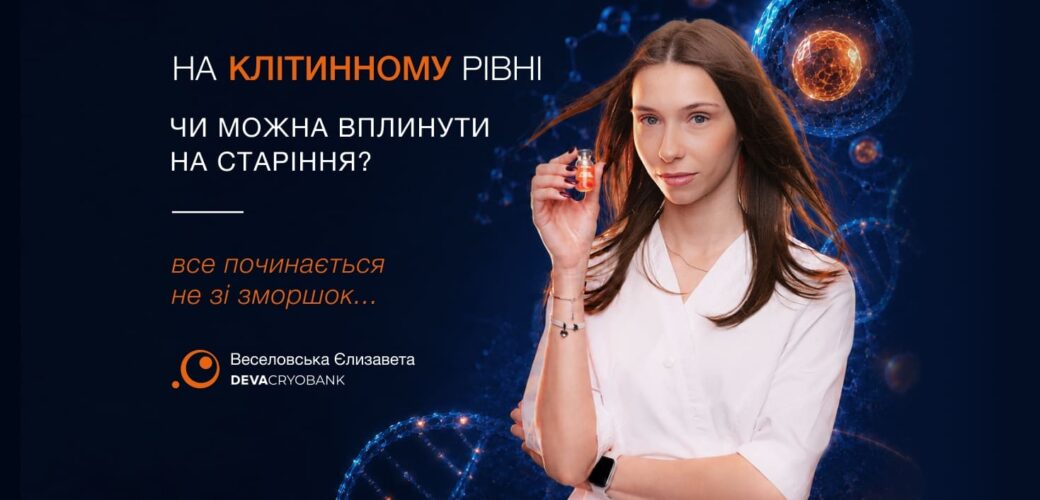
Author’s Column: “At the Cellular Level”
We often associate aging with wrinkles, joint pain, or declining energy. However, modern molecular biology tells a different story: the earliest destructive processes begin at the microscopic level long before the first clinical symptoms become noticeable.
This was the key insight I took away from the presentation by Nadiia Kryzhanovska at the “Future is Now — Between Science, Practice, and a New Quality of Life” forum.
The discussion is no longer limited to healthy lifestyle choices—it now includes advanced cellular technologies that, until recently, existed only as theoretical concepts.
Why Do Cells “Grow Old”?
One of the central mechanisms of aging is cellular senescence—a state in which a cell permanently stops dividing, loses its ability to regenerate tissues, yet remains metabolically active.
These senescent cells no longer undergo apoptosis, the body’s natural process of programmed cell death, nor are they effectively removed by the immune system. Instead, they develop what scientists call the Senescence-Associated Secretory Phenotype (SASP)—a state in which they continuously release inflammatory signaling molecules such as cytokines and chemokines.
These molecules maintain chronic low-grade inflammation and impair the function of neighboring healthy tissues.
This is why modern gerontology increasingly considers aging not simply as a consequence of chronological age, but as a biological process with identifiable molecular targets that may eventually become amenable to intervention.
Our Daily Habits Also Act at the Cellular Level
Another important topic discussed during the presentation was nutrigenomics—the science of how nutrition influences gene activity.
For example:
- Excess sugar accelerates glycation, producing advanced glycation end products (AGEs) that damage collagen, elastin, and other structural proteins, accelerating tissue aging.
- Excessive protein intake may chronically activate the mTOR signaling pathway, suppressing autophagy—the cell’s natural mechanism for removing damaged proteins and dysfunctional organelles.
- Insufficient dietary fiber disrupts the production of short-chain fatty acids, weakens the intestinal barrier, and promotes systemic immune activation.
- Chronic sleep deprivation and persistent stress disturb circadian rhythms and cortisol regulation, sustaining low-grade systemic inflammation.
This is why recommendations regarding healthy sleep, regular physical activity, stress management, and balanced nutrition are now supported not only by epidemiological evidence but also by well-established cellular biology.
Science Is Learning to Regenerate Tissues
One of the most fascinating aspects of the lecture was the remarkable pace at which cellular technologies continue to evolve.
A Nature publication (2018) demonstrated the possibility of direct in vivo cellular reprogramming, where stromal cells were converted into epithelial cells directly within damaged tissue. This approach opens new possibilities for repairing complex tissue defects without first expanding cells in the laboratory.
Equally promising is the long-term work of Brazilian researchers developing a laminin-based polymer scaffold that creates a biological environment capable of guiding axonal growth after spinal cord injury, potentially restoring nerve conductivity.
Another landmark example is Geron’s GRNOPC1 clinical program—the world’s first clinical trial using oligodendrocyte progenitor cells derived from embryonic stem cells to treat spinal cord injuries. Although the trial demonstrated encouraging safety results, the project was ultimately discontinued not because the technology failed, but because of the enormous financial investment and lengthy development process required.
For me, this illustrates an important reality: translating scientific discoveries into clinical practice depends not only on scientific progress but also on the availability of resources, time, and sustainable investment.
Why Does This Matter Today?
My main conclusion after this presentation is straightforward.
Cellular technologies are gradually moving beyond the concept of “medicine of the future.” They are steadily becoming part of modern medical practice.
Certainly, many of these technologies have not yet become standard treatments. Nevertheless, the overall direction is clear: medicine is progressively shifting from treating symptoms toward addressing disease mechanisms at the cellular and molecular levels.
This is also why preserving high-quality cells at the moment when they possess their greatest biological potential is becoming increasingly important. Future medical breakthroughs will always depend on the availability of viable, high-quality cellular material.
At DEVA Cryobank, we work with cells that can be collected immediately after the birth of a child, as well as other types of autologous cells where clinically appropriate. Their processing and cryopreservation are performed according to modern biotechnology standards.
This is not an attempt to predict exactly what cellular medicine will look like in ten or twenty years. Rather, it is an opportunity to create a personal biological reserve at the moment when these cells possess their highest proliferative and regenerative potential—preserving the possibility of benefiting from future advances in regenerative medicine.