If Cells Were Not Preserved at Birth: What You Should Know About Cryopreserving Dental Pulp from Deciduous Teeth
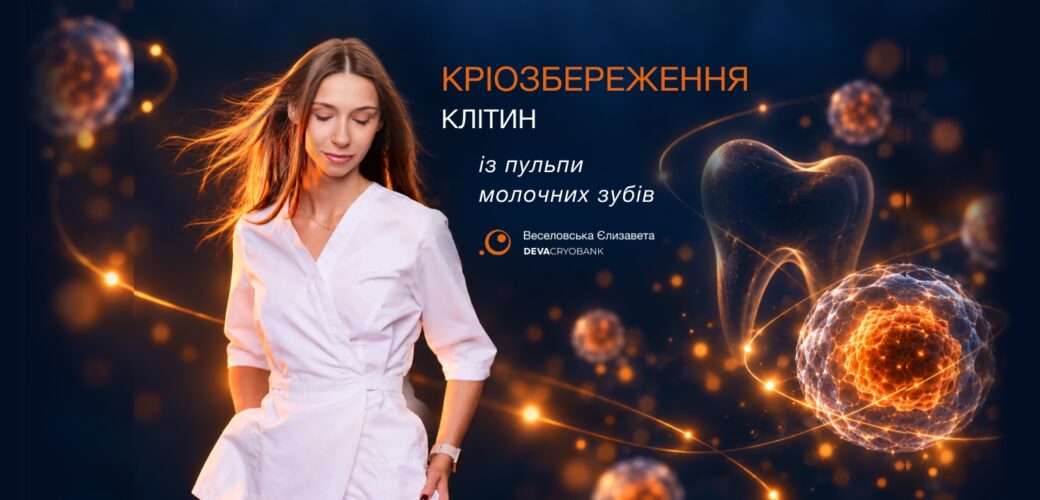
Author’s column “At the Cellular Level”
In our previous materials, we have often discussed cells that can be obtained at the time of a child’s birth: hematopoietic stem cells from umbilical cord blood, as well as mesenchymal stromal cells from umbilical cord tissue and the placenta.
The opportunity to obtain these cells exists only during childbirth. This naturally raises the question: can a personal cellular reserve be created later if it was not established immediately after birth?I became interested in this topic because the answer is actually more complex than a simple “yes” or “no.”
It is impossible to restore the missed opportunity to preserve hematopoietic stem cells (HSCs) from umbilical cord blood and/or mesenchymal stromal cells (MSCs) from umbilical cord tissue. However, another window of opportunity opens during childhood: obtaining MSCs from the pulp of deciduous teeth. In scientific literature, these cells are referred to as SHED — Stem Cells from Human Exfoliated Deciduous Teeth.
What Is Inside a Deciduous Tooth?
The pulp is living tissue inside the tooth that contains blood vessels, nerve fibers, and various cell populations. MSCs can be isolated from among these cells.
A distinct population of these cells was first described in 2003. Laboratory studies have shown that they are capable of proliferating and, under certain conditions, differentiating into several cell types, including those involved in the formation of dentin, bone, and cartilage tissue. The origin of these cells is also of particular scientific interest. Dental tissues develop with the participation of neural crest cells — a temporary embryonic structure that gives rise to various tissues and parts of the peripheral nervous system during the development of the body.
For this reason, researchers are studying not only the ability of dental MSCs to form mineralized tissues, but also their paracrine and immunomodulatory properties.
Paracrine action means that cells can influence their microenvironment through signaling molecules released into the intercellular space. In laboratory and preclinical models, this mechanism is studied in the context of regulating inflammatory processes, supporting the viability of other cells, and restoring damaged tissues.
At the same time, the biological potential of cells demonstrated in the laboratory cannot automatically be equated with proven therapeutic efficacy in humans. The path from experimental research to a clinical protocol requires the assessment of safety, efficacy, dosage, and route of administration.
Can Dental Cells Replace Cells Obtained at Birth?
No. These are different cellular resources.
Umbilical cord blood is primarily a source of hematopoietic stem cells. They give rise to blood and immune system cells and have been used in clinical practice worldwide for many years for defined medical indications.
The pulp of deciduous teeth and umbilical cord tissue are sources of MSCs. However, cells from these sources differ in their proliferation rate, signaling molecule profile, properties, and ability to differentiate along different cellular lineages. Studies comparing MSCs from umbilical cord tissue and dental pulp demonstrate different advantages of each source. For example, in certain laboratory models, MSCs isolated from umbilical cord tissue showed a higher proliferation rate, while dental MSCs demonstrated pronounced osteogenic differentiation potential — the ability to form bone tissue cells.
Therefore, this is not a replacement, but an additional opportunity to preserve another type of a person’s own cells.
Why Has Science Focused on Deciduous Teeth?
First and foremost, because the source is accessible. Deciduous teeth are naturally replaced at approximately 6 to 12 years of age. Obtaining the tooth usually does not require a separate invasive procedure: it either falls out naturally or is removed by a dentist for medical or orthodontic reasons.
The second reason is the age of the cells. They are obtained during childhood and may demonstrate a high proliferative capacity under laboratory conditions. However, it would be incorrect to state that they “have no genetic damage.” The condition of the cells depends on many individual factors and is evaluated in the laboratory.
The third reason is their origin and properties. Preclinical studies have shown that MSCs obtained from dental pulp may have pronounced neuroprotective potential compared with MSCs from other sources. This is associated, in particular, with their origin from neural crest cells.
In the future, this may give clinicians an opportunity to obtain MSCs from dental pulp for the prevention or treatment of neurodegenerative diseases. This makes the pulp of a deciduous tooth a potential source of cells for a long-term personal cryogenic reserve.
Is Every Deciduous Tooth Suitable for Cryopreservation?
No. Having twenty deciduous teeth does not mean having twenty identical opportunities.
The following factors matter:
- the condition of the tooth and its pulp;
- the absence of a pronounced carious or inflammatory process;
- the degree of natural root resorption;
- the method by which the tooth was obtained;
- the time and conditions of transportation;
- the results of the laboratory assessment of the sample.
Living pulp is required to isolate cells. If the tooth has remained for a prolonged period under conditions unsuitable for MSC isolation or has been placed in an environment not intended for this purpose, the possibility of obtaining viable cells may be lost.
Therefore, it is advisable to contact DEVA Cryobank while the deciduous tooth is only beginning to loosen or before its planned removal. This makes it possible to obtain a transportation kit in advance and properly arrange the transfer of the tooth to the laboratory.
What Happens After the Tooth Arrives at the Laboratory?
At the laboratory, specialists assess the condition of the received sample and the possibility of working with the pulp. Then, in accordance with the technological protocol, the cells are isolated, their viability and growth are evaluated, and quality and sterility controls are performed.
If the cell culture meets the established criteria, it is prepared for cryopreservation. During cryopreservation, MSCs are placed into a state of suspended activity, or metabolic rest, in which the cells retain their viability for subsequent cultivation and therapeutic use.
It is important to understand that the transfer of a tooth does not in itself guarantee that a sufficient number of viable cells can be obtained from its pulp. The final result becomes known after laboratory screening.
Who May Use the Preserved Cells?
The obtained cells are an autologous product. Therefore, the future use of dental MSCs will depend on the specific diagnosis, medical indications, the properties of the cellular product, and the clinical protocols in force at that time.
Due to their low immunogenicity, MSCs obtained from different sources, including the pulp of a deciduous tooth, may be used for close relatives. This makes the pulp of a deciduous tooth a potential source of cells for a long-term personal cryogenic reserve.
Another Window of Opportunity
If cells were not preserved at the time of a child’s birth, it is impossible to return to that moment. However, the natural replacement of deciduous teeth opens another opportunity: to obtain and preserve mesenchymal stromal cells from living pulp.
This is not a replacement for HSCs from umbilical cord blood or MSCs from umbilical cord tissue, nor is it a guarantee of future use. It is a separate cellular resource with its own biological properties and areas of scientific research. For me, this distinction is the most important. A responsible decision about cryopreservation begins not with promises, but with understanding exactly what is being preserved, how cells from different sources differ, and at what stage their research currently stands.
When a child’s deciduous teeth begin to change, it is advisable to consult DEVA Cryobank specialists in advance. This will help assess the possibility of cryopreservation and properly arrange the collection and transportation of the tooth.
*This material is provided for informational purposes and does not constitute medical advice. The possibility of using the cells is determined individually in accordance with medical indications and current clinical protocols.
Scientific References
Miura M. et al. SHED: Stem Cells from Human Exfoliated Deciduous Teeth. 2003.
Ren H. et al. Comparative Analysis of MSCs from Umbilical Cord and Dental Pulp. 2016.
Mohd Nor N.H. et al. From Teeth to Therapy: A Review of Therapeutic Potential and Clinical Applications of SHED. 2023.
Ma L. et al. Cryopreserved Dental Pulp Tissues of Exfoliated Deciduous Teeth. 2012.